Happy Empathy Day! Empathy Day was founded in 2017 and now, on its seventh anniversary, it’s stronger and reaching more children than ever. Empathy is a vital skill for humans – without it, we can’t build solid communities and connections. Without those, we see a rise in hatred and isolation. Sound familiar?
EmpathyLab, the organisation behind Empathy Day, was set up to help children to learn empathy (98% of us can increase our empathy skills through practice) using stories and books. Did you know that when we read a story, our brain reacts to the events as though they were happening to us in real life? That’s why your heart races when the protagonist is in danger, and why you cry when the dog dies. When we connect to characters in stories, we increase our own capacity for empathy – and that translates into the real world. If you’ve read a book about someone being made homeless, for example, you’re more likely to empathise with homeless people in real life.
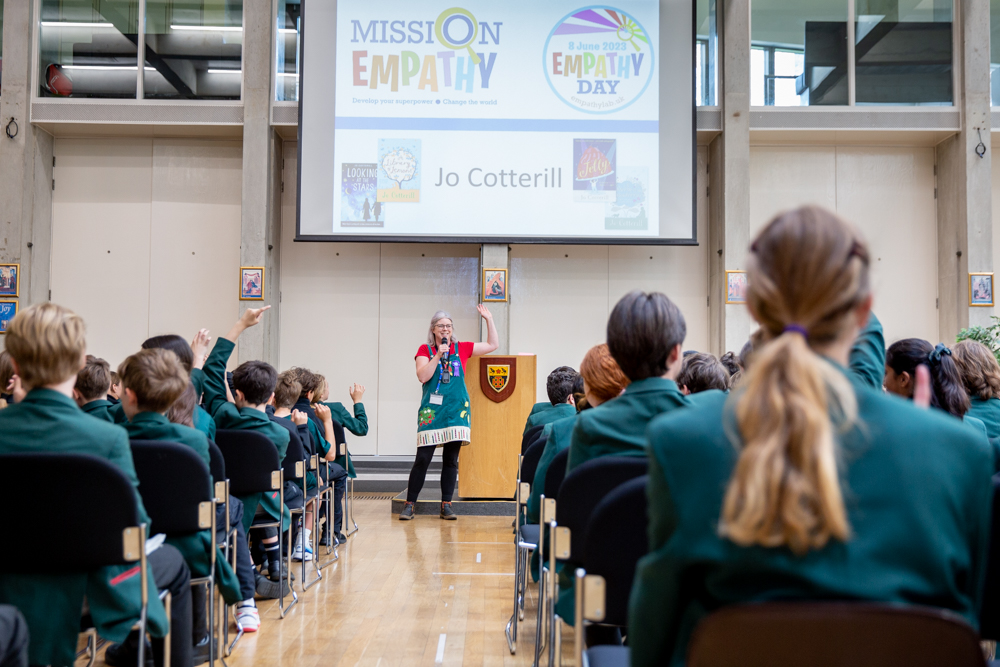
Yesterday, I travelled to St Benedict’s School in Ealing, West London. I’d been invited to give empathy talks to Y7 and 8 in the senior school and Y3-6 in the junior school. Schools, no matter their ethos or location, all face the same issues: young people finding their own identities and place in the world who bash up against each other and against authority. It’s inevitable. This generation of children is also facing the issues that come with so much of our lives being online. Several children said quite matter-of-factly that their parents don’t listen to them properly because they’re always on their phones. That’s happening EVERYWHERE. We are often told about the dangers to the mental health of young people by being online, but less about the dangers to children who can’t find someone to listen to them.

We did an exercise called The Listening Switch where you practise listening to someone and not thinking about anything else at the same time. We also did The Empathy Mirror, where you mirror someone else’s body position in order to try to understand how they’re feeling. And I read a couple of snippets from my books and asked the students to name the emotions the main character was feeling. The kids were all BRILLIANT – as kids so often are! I love going into schools and talking to young people. They are always so inventive and interested and willing to have a go.
Empathy Day consists of three main areas this year: Mission Empathy (using specially produced Toolkits for schools, libraries and parents), the Read For Empathy Collection (carefully selected published books that help children develop their empathy skills because of the characters and stories they include) – and Empathy Day Live! Lots of amazing authors talking about books and empathy and trying out the various resources from the toolkits.
I have been involved a little behind the scenes, helping to record and edit some of the videos and I can tell you they’re WONDERFUL. Do check out everything on the Empathy Day page.
Empathy Day also encourages us to make an Empathy Resolution. This year, mine is to try to remember to think before posting online: it’s easy to boost bad or scary news rather than to put more positive, uplifting things in the world. Sometimes the bad news is important, but I’m going to think twice before sharing things that make people angry or upset. Instead, I’m going to try to increase my positivity-boosting posts online, sharing great books (and saying why they’re great) and lovely pieces of news that I come across.
Thanks to St Benedict’s for having me, and for the photos!
 Jo Cotterill